

Desert Locust Monitoring Part 2 – Introduction
 ADD TO E-PORTFOLIO
 SUGGEST AN EDIT
ADD TO E-PORTFOLIO
SUGGEST AN EDIT
SUGGEST AN EDIT
ADD TO E-PORTFOLIO
SUGGEST AN EDIT
Training Resource Description
In Part 2, you will hear about how IGAD’s Climate Prediction and Applications Centre (ICPAC), leverages near real-time climate monitoring and forecasting to support East African member states in planning and decision-making, and the importance of addressing transboundary challenges like locust infestations using satellite data, which transcends national borders.
Despite challenges such as infrastructure limitations, unstable energy, and data-processing capacity, projects like GMES in Africa and ESA’s GDA are improving access to Earth Observation data. The East African Hazards Watch Pest Watch platform, which has been enhanced with EO data from the GDA Fragility, Conflict Security and GDA Agriculture activities, will strengthen early warning systems, bridge the gap between early warning and early action, and enhance community preparedness for locust outbreaks.
Related resources and websites
- GDA Story: Desert Locusts Monitoring – Read more about the Desert Locusts project on the GDA website
- East Africa Hazards Watch – Pests – East Africa Hazards Watch platform
Featured Imagery
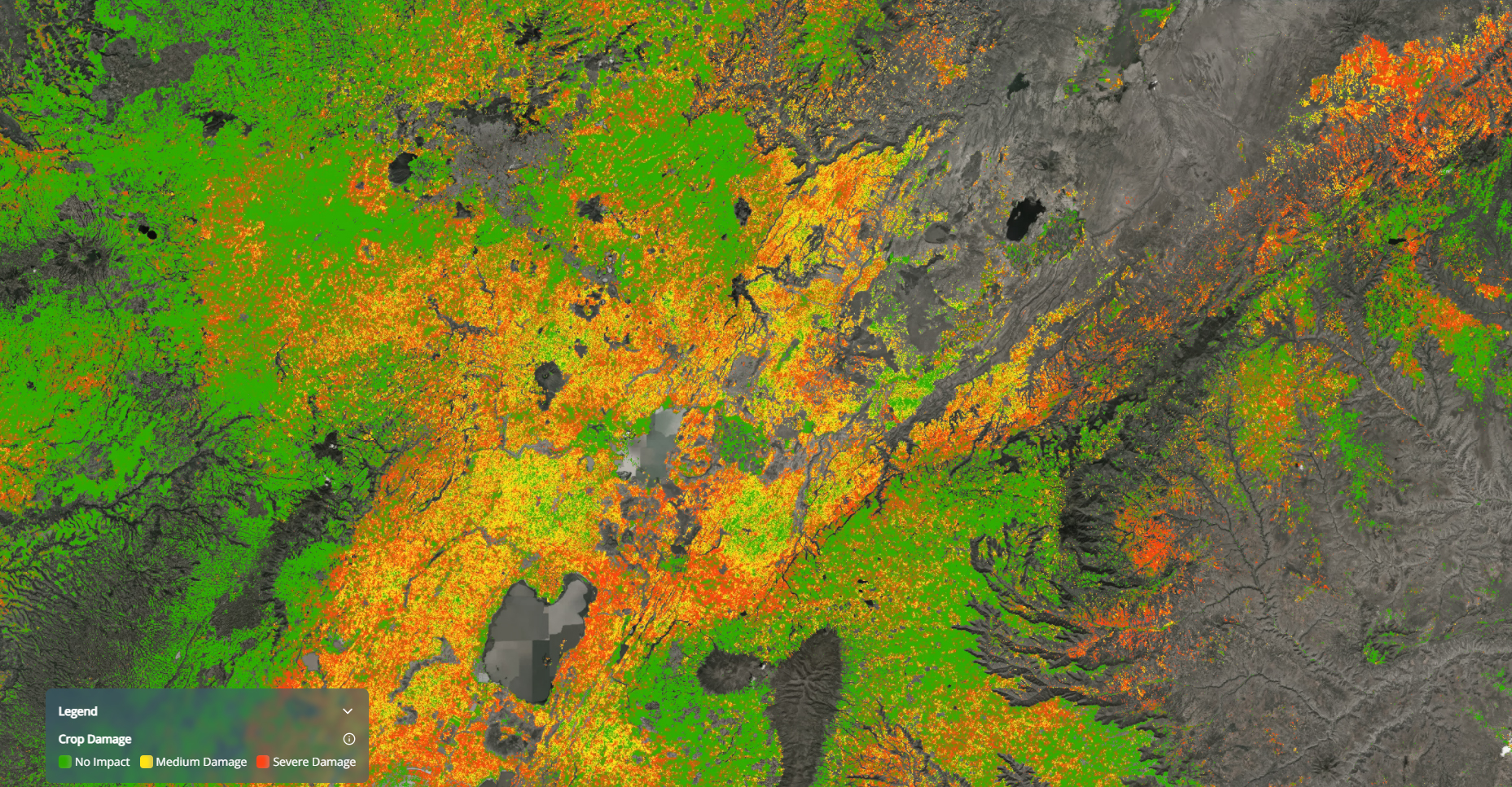
Crop damage map of Ethiopia showing concentration of damage in Central Ethiopia, Tigray and Amhara, the country’s main farming zones. The green areas show cropland that stayed healthy, yellow and red areas show fields where vegetation disappeared, evidence of moderate to severe damage caused by locust feeding.
Source: GDA Agriculture / Impact Sphere