

Desert Locust Monitoring Part 1 – Introduction
 ADD TO E-PORTFOLIO
 SUGGEST AN EDIT
ADD TO E-PORTFOLIO
SUGGEST AN EDIT
SUGGEST AN EDIT
ADD TO E-PORTFOLIO
SUGGEST AN EDIT
Training Resource Description
Desert locusts are one of the most destructive pests in the world, one small swarm can contain 80 million locusts causing substantial damage to crops and vegetation. In East Africa, these outbreaks are expected to increase due to climate change. Smallholder farmers and pastoralists have already been impacted by recurring droughts and conflict, the growing risk of desert locusts has resulted in devastating losses to crops and livelihoods. Furthermore, the large-scale use of hazardous pesticides deployed in response to these crises poses significant risks to public health and the environment. These pesticides have led to soil degradation, water contamination, and harm to key species such as honeybees, fish, and birds. Field workers and farmers have also reported health issues related to pesticide exposure. The loss of crops exacerbates food insecurity and directly affects local communities, with the knock-on effect of reducing overall living standards.
In response to these issues, the Intergovernmental Authority on Development (IGAD) is collaborating with the World Bank within the framework of the World Bank‘s Emergency Locust Response Project (ELRP), and with GDA Fragility, Conflict and Security and GDA Agriculture, to develop a desert locust monitoring service using remote sensing, aimed at supporting early warning efforts and crop damage assessment. Based on IGAD’s requirements, two desert locust mapping services have been developed using Google Earth Engine (GEE). The first is an early warning detection system designed to track potential breeding grounds, while the second focuses on mapping crop damage. Both services integrate ground observations from the FAO’s Desert Locust Hub with Earth Observation (EO) data.
Related resources and websites
- GDA Story: Desert Locusts Monitoring – Read more about the desert locusts project on the GDA website.
- GDA Story: Desert Locusts Follow-up – Development continued under the GDA agriculture activity for this project – you can read more about it here.
- The World Bank Group and the Locust Crisis – World Bank topic page on Desert Locusts, providing information on how the World Bank is supporting the response to the locust crisis.
Featured Imagery
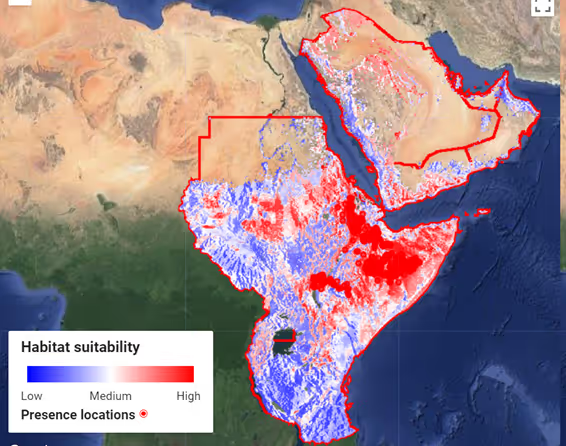
Habitat suitability of Desert Locust for East Africa and the Middle East based on a Machine Learning approach.
Source: GDA Fragility, Conflict and Security

This image shows vegetation damage assessment indicated by (a) the normalized vegetation index (NDVI) and (b) desert locust occurrence records for May 2020 in Turkana County in Kenya.
Source: Mongare et al., MDPI (CC BY 4.0)

This image shows a satellite-derived map of vegetation change across East Africa used to assess the impact of locust outbreaks. It highlights areas where vegetation has declined, indicating possible locust damage, alongside regions where vegetation remains stable or has improved. The map helps identify damage hotspots and supports monitoring and response efforts.
Source: VITO

Sentinel-2 Normalized difference vegetation index (NDVI) for Samburu County, Kenya. NDVI provides a measure of vegetation “greenness,” which is directly linked to locust breeding and survival conditions. NDVI is combined with rainfall and soil moisture data to predict potential locust outbreaks.
Source: Contains modified Copernicus Sentinel data [2026]